
 How To Object
What Happened to Drumbeg’s Green Belt?
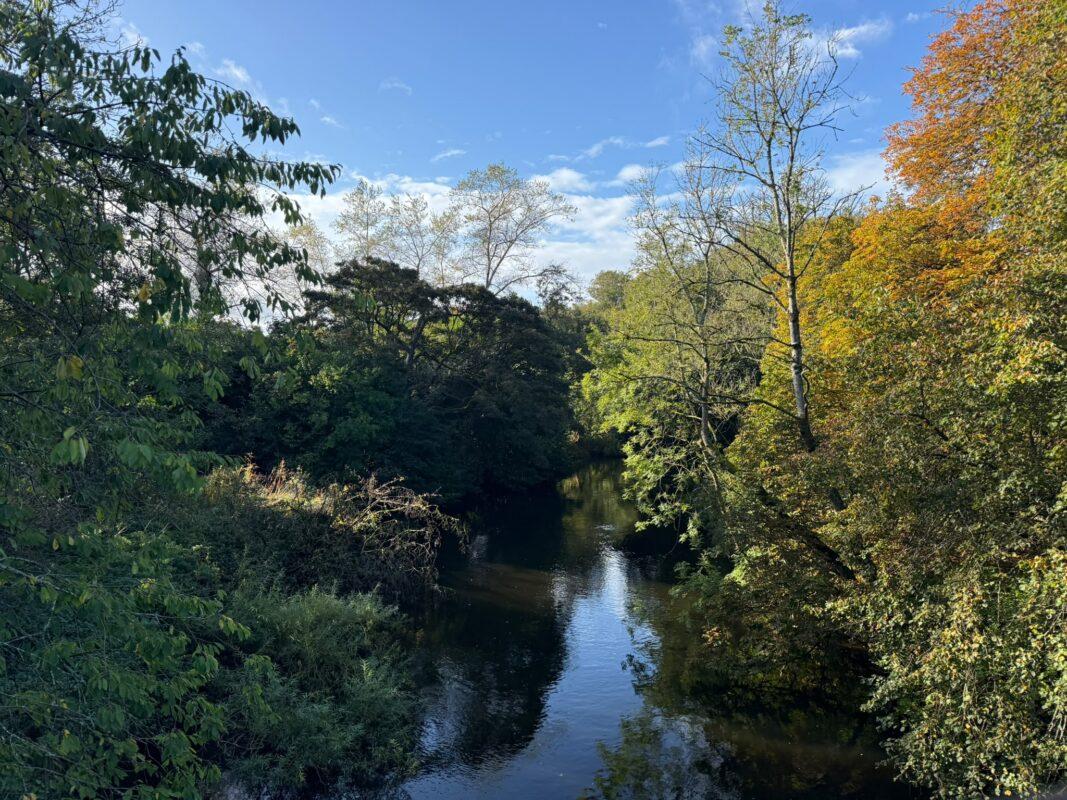
Many people will remember when the countryside around Drumbeg was known as Green Belt. For generations, it was somewhere the people of Belfast and Lisburn could escape the noise and traffic, take a walk, breathe a little easier, picnic beside the river or perhaps even propose to someone. A landscape of roses and rivers, old trees, winding lanes and green fields. Somewhere special, and somewhere worth protecting.
This was never just empty land waiting for someone to find a use for it. People had been enjoying it for generations, walking, fishing, cycling, watching wildlife, meeting friends or simply finding a little peace. Its importance was recognised long before most of us had reason to worry about planning applications. Lagan Valley was designated an Area of Outstanding Natural Beauty in 1965, and the establishment of Lagan Valley Regional Park in 1967 recognised its value as a green refuge between Belfast and Lisburn.
So when did the Green Belt disappear? And who decided that the countryside we had spent generations protecting should be treated differently?
The Green Belt didn’t disappear overnight
The significant change came in 2010, when Northern Ireland’s Department of the Environment introduced Planning Policy Statement 21 (PPS21), Sustainable Development in the Countryside. Until then, planning policy distinguished between Green Belt and other countryside, with Green Belts intended to prevent towns and cities spreading endlessly into the surrounding rural landscape. PPS21 replaced that distinction with a common approach to countryside development across Northern Ireland.
The government’s argument was that the new policy would strike a better balance between allowing appropriate development in rural areas and protecting the countryside. But if Green Belt had been given particular protection because of its importance, why remove that distinction? The land might still appear as Green Belt on an older planning map, but the policies governing what could be built there had changed. In effect, a particular layer of protection had been lost, even though the countryside itself had not changed at all.
Read the Northern Ireland Assembly’s written answers on PPS21
Why does this matter to Drumbeg?
Because Drumbeg isn’t just any stretch of countryside. It sits within a landscape that has provided generations of people with access to nature, recreation and open space, remarkably close to two of Northern Ireland’s busiest urban areas. Its fields, hedgerows, woodland and river corridors also provide habitats for wildlife that depends on these connected green spaces to survive.
And yet the pressure to develop this countryside continues. We have already seen the long-running proposal for housing on Quarterlands Road, and now almost alongside there is a proposal for a holiday park at Ballyskeagh Road close to The Hermitage. These are different sites, with different planning circumstances one citing ‘tourism need’ one citing ‘housing need’ and each must be assessed on its own merits. But together they raise a wider question about the cumulative pressure being placed on this landscape. How much can be lost, field by field and hedgerow by hedgerow, before we begin to lose the benefits for which it was protected?
The AONB hasn’t gone anywhere
Here is something worth remembering. The removal of the former Green Belt policy did not remove Lagan Valley’s Area of Outstanding Natural Beauty designation. Green Belt and AONB are two different things. Green Belt policy was concerned particularly with controlling development around settlements and maintaining the distinction between town and countryside, while AONB designation recognises the special character and scenic value of a landscape.
Lagan Valley’s AONB designation remains in place, and its landscape character continues to be protected through planning policy. The loss of the Green Belt distinction did not suddenly make the land less beautiful, less ecologically important or less deserving of protection. Nor did it remove the responsibility of planning authorities to consider the impact of development on the countryside, its habitats and its wildlife particularly in this time of climate change.
Read the adopted Local Development Plan, Part 1: Plan Strategy
So what protects it now?
In September 2023, Lisburn & Castlereagh City Council adopted the Plan Strategy of its Local Development Plan 2032. This contains policies intended to protect the countryside, wildlife, habitats and the distinctive character of places such as Drumbeg. Among the most relevant are NH6, which addresses development within Areas of Outstanding Natural Beauty; NH5, which protects important habitats and natural heritage features; and COU1, COU15 and COU16, which deal with development in the countryside, its integration into the landscape and its effect on rural character. There are also specific policies, including TOU5 and TOU7, governing holiday parks and tourism development.
These are not simply suggestions for developers to consider if they feel like it. Under Section 6 of the Planning Act (Northern Ireland) 2011, planning decisions must be made in accordance with the development plan unless material considerations indicate otherwise. That doesn’t mean every proposal must be refused, but it does mean that the policies protecting this landscape must be properly considered and applied.
Read the adopted Local Development Plan, Part 2: Operational Policies
Read Section 6 of the Planning Act (Northern Ireland) 2011
A protected landscape should mean something
There is something rather contradictory about recognising a landscape as outstanding, encouraging people to enjoy it, celebrating its wildlife and natural beauty, and then repeatedly asking how much development it can accommodate. We have become very good at giving places special names. Green Belt, Area of Outstanding Natural Beauty, Regional Park. But names alone don’t protect a hedgerow, keep a field green or provide a home for a family of barn owls. That takes intelligent planning decisions which recognise why these places were protected in the first place.
The people who walked these lanes sixty years ago, who brought their children here for picnics, who watched the seasons change along the Lagan, probably never imagined that future generations would have to argue quite so hard for the countryside to remain countryside. What was once understood as a shared resource, somewhere to escape the built environment rather than extend it, is increasingly being pillaged for its development potential.
The Green Belt policy changed in 2010, but the landscape didn’t suddenly become less valuable. The fields didn’t become redundant, the trees didn’t stop providing shelter, and the wildlife didn’t receive notice that its habitat was now considered suitable for something else. The Lagan Valley AONB remains a protected landscape, and the adopted Local Development Plan contains policies intended to safeguard it. The question is whether those protections will be applied consistently and with sufficient weight when decisions are made.
Because once a field is built upon, it is no longer a field. Once an ancient hedgerow is removed, no amount of ornamental planting can replace the habitat and biodiversity that has been lost. And once the character of a landscape has been fundamentally altered, it is extraordinarily difficult to recover.
We should not have to argue endlessly for the value of a place that was recognised as outstanding more than sixty years ago. The challenge now is to ensure that the protections which remain mean something in practice, so that future generations still have somewhere to walk, breathe, picnic beside the river and perhaps even propose.
Further reading
The Northern Ireland Assembly: Written Answers, November 2010
The Northern Ireland Assembly: Ministerial Review of PPS21, July 2013
Lisburn & Castlereagh: Adopted Local Development Plan, Part 1
Lisburn & Castlereagh: Adopted Local Development Plan, Part 2
Planning Act (Northern Ireland) 2011, Section 6